Baratie
Visit App
Timeline
December 2025
Role
Product Designer
Team
Just me!
Tools
Figma, Vercel
Context
I learned the basics of AI engineering in my Master's program and wanted to create something more robust when the semester ended. So, I created Baratie as a personal challenge to take those classroom concepts and engineer a full-scale app on my own.
Features
Multi-Modal Ingestion
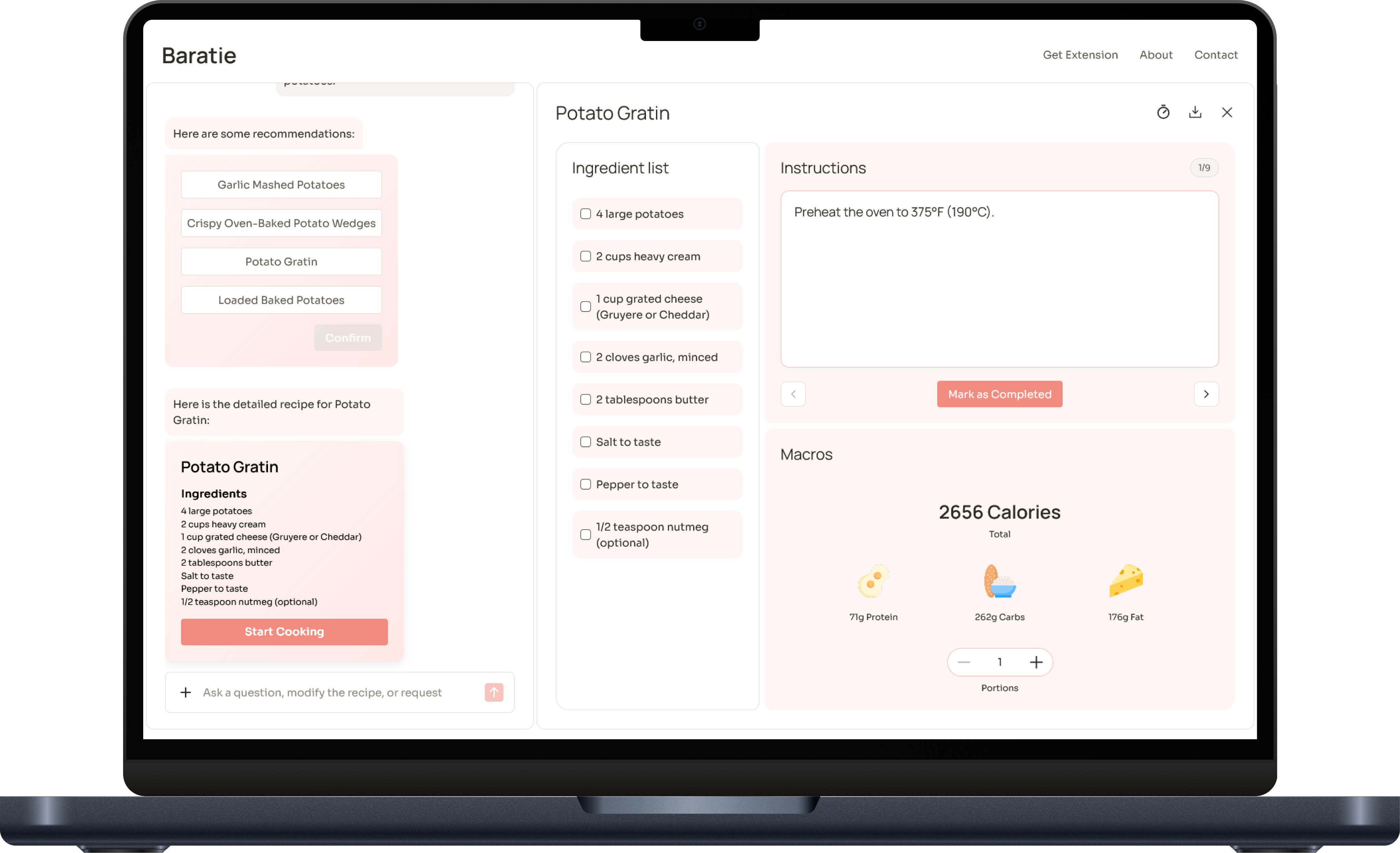
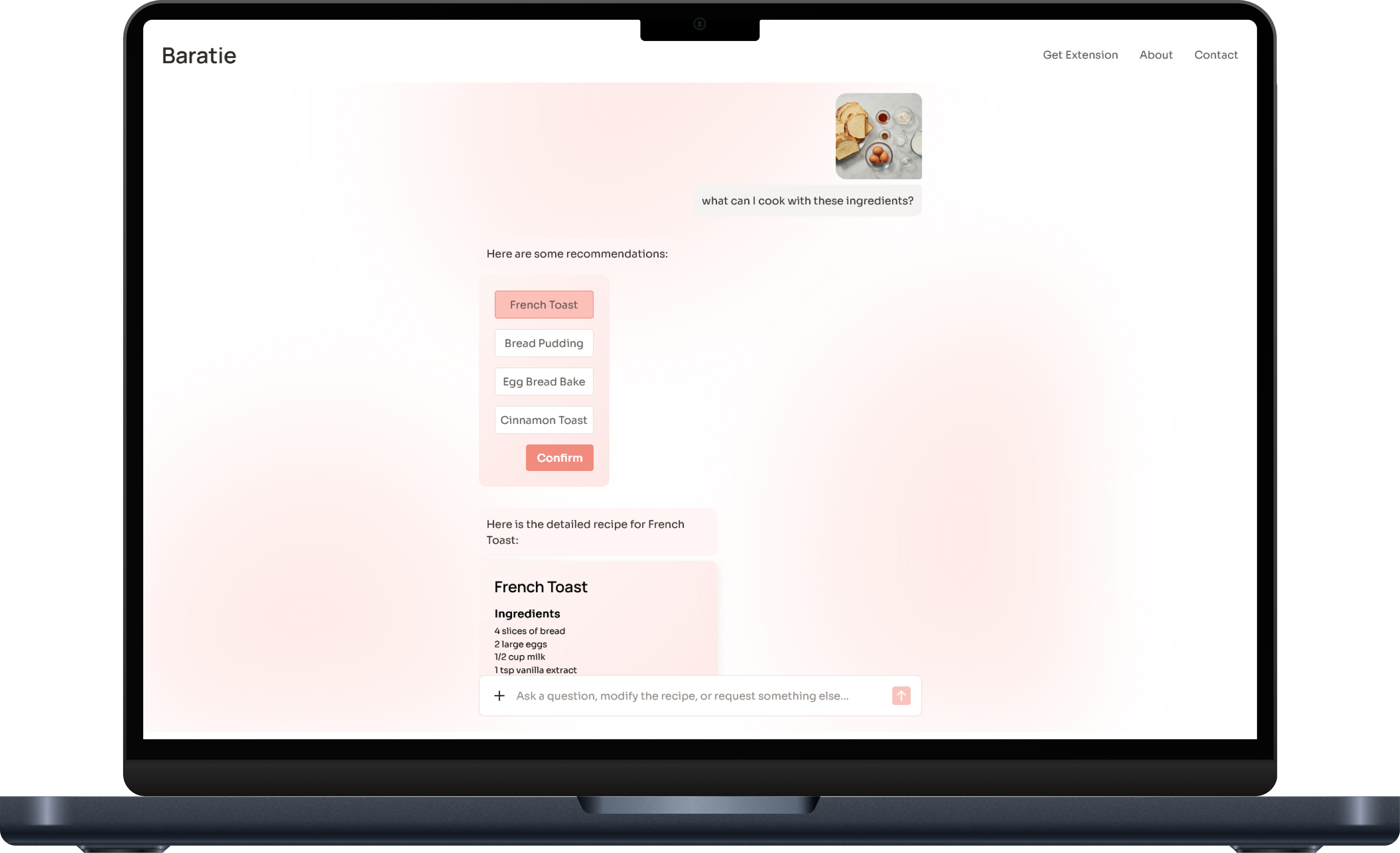
I built the system to accept input from almost any source—users can paste YouTube URLs, upload PDF cookbooks, or snap photos of raw ingredients. The backend determines the "intent" of the file type and routes it to the specific AI agent best suited to extract the data.
Context-Aware Adjustments
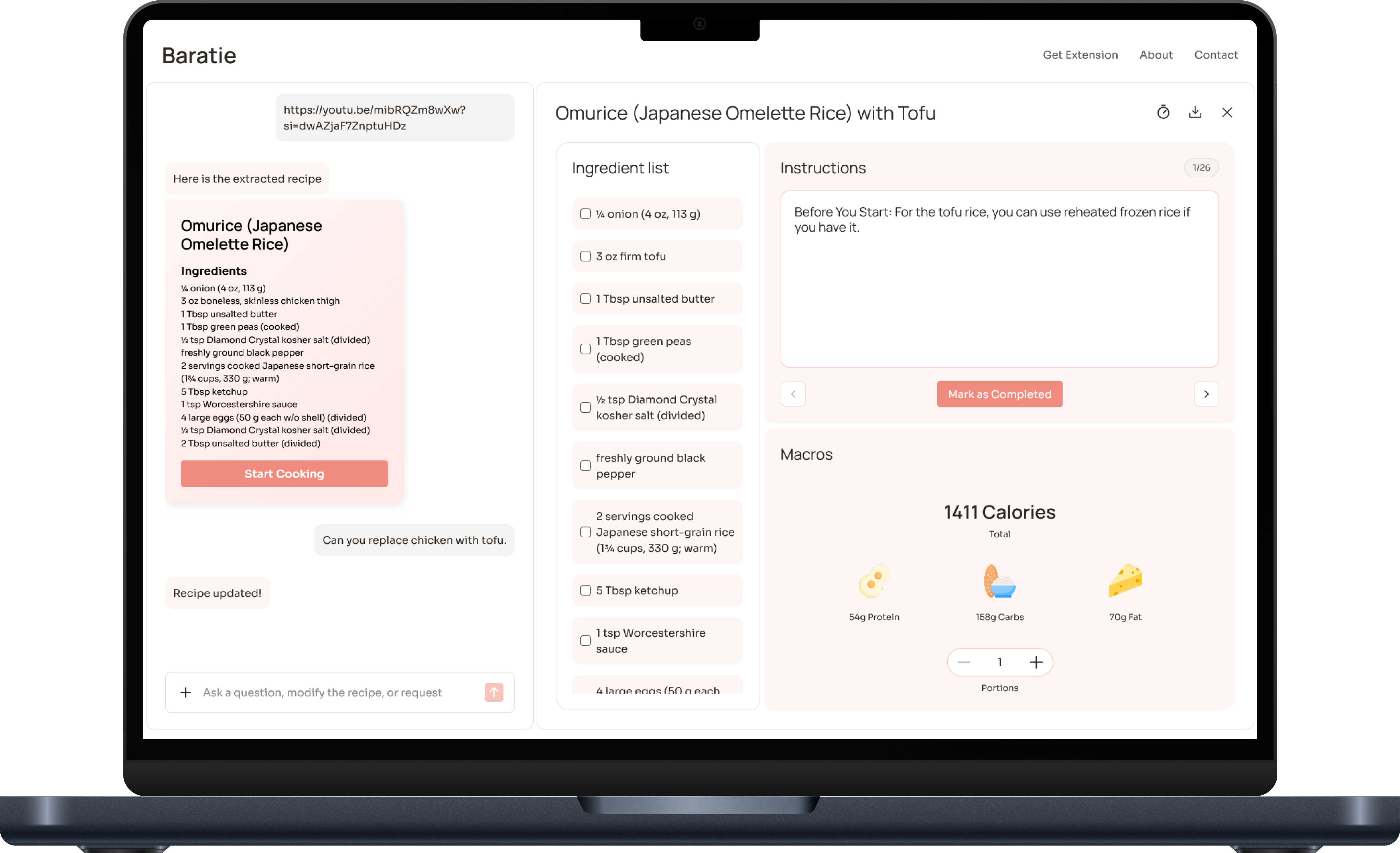
Beyond static instructions, the app supports dynamic modifications through natural language. Users can ask to "make this vegan" or "lower the calories," and the system intelligently reconstructs the ingredient list and cooking steps to match these constraints without breaking the core recipe.
Design
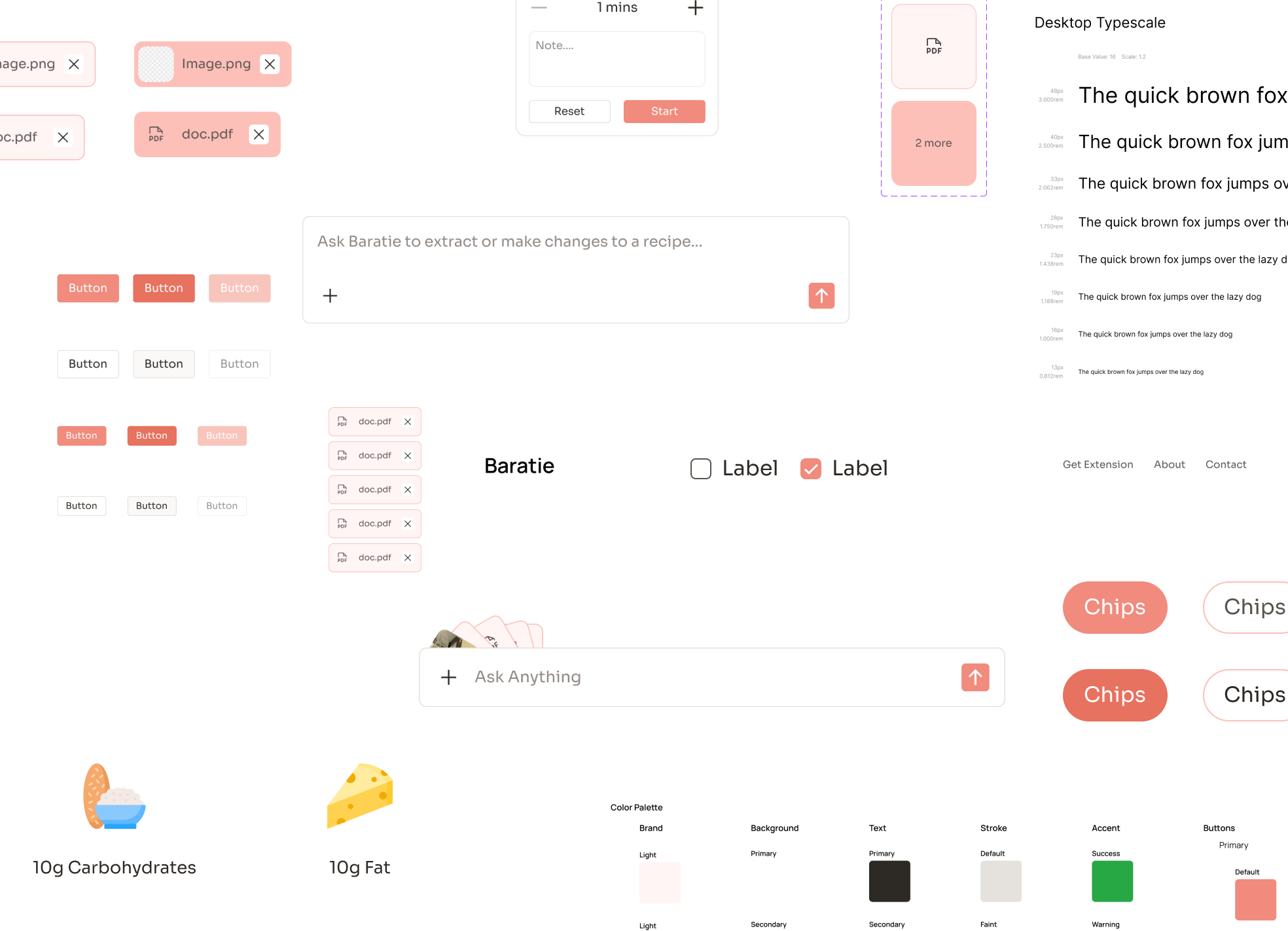
Crafting a Custom Design System
To minimize friction, I evaluated multiple architectural approaches for the reporting feature. I mapped out flows for integrating it into the main feed versus creating a dedicated section, weighing the pros and cons of discoverability against user overwhelm.
Engineering Fluid Motion
Leveraging Framer Motion, I coded custom micro-interactions—from bouncy button states to fluid page transitions
Development
Claude Code: Agentic Workflow
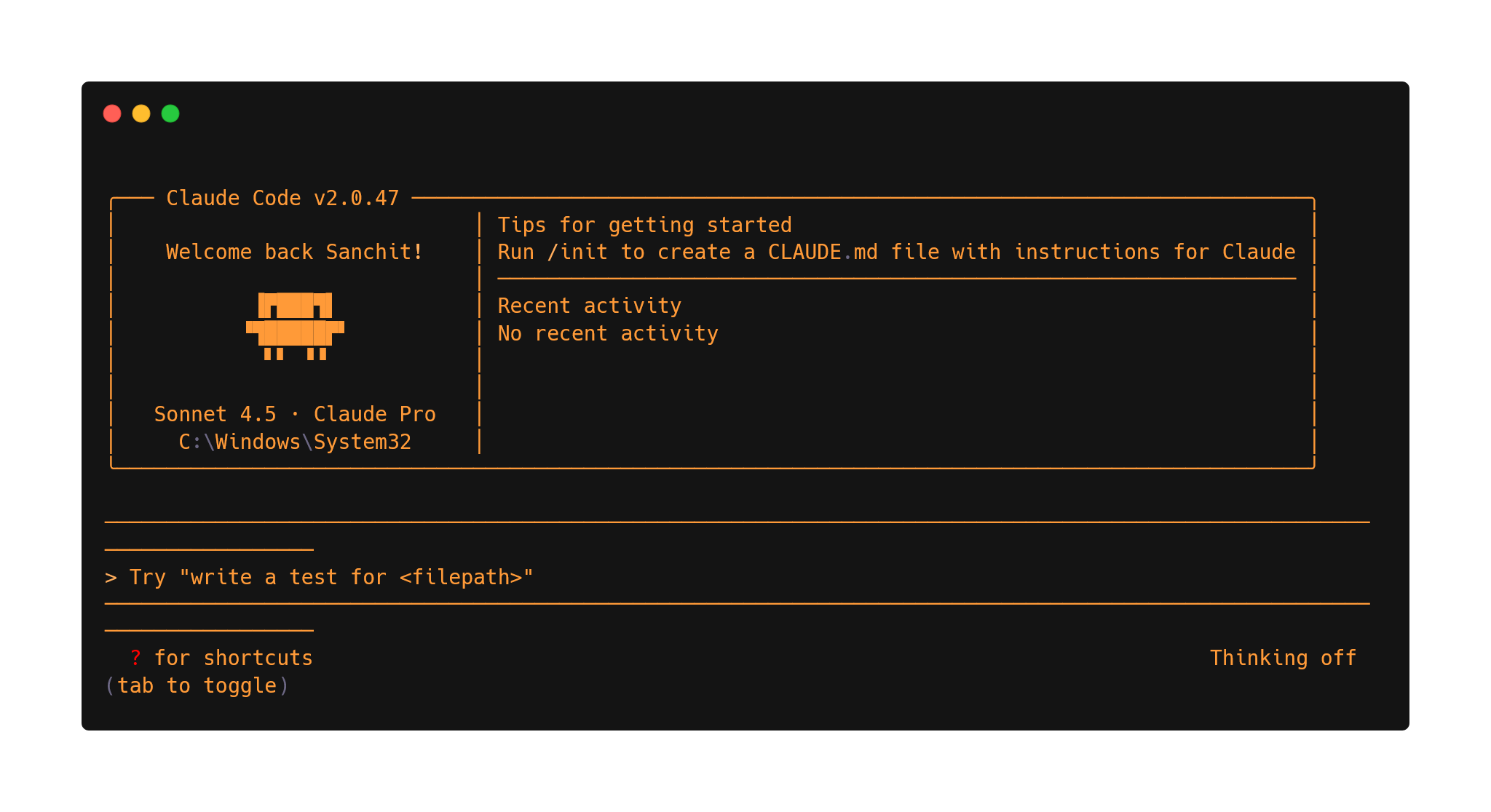
I leveraged the Claude Code CLI as an autonomous pair programmer to accelerate development. By establishing strict architectural rules in a root CLAUDE.md file, I was able to guide the agent to implement complex features—like the state machine logic—while I focused on high-level system design.
GitHub: Version Control
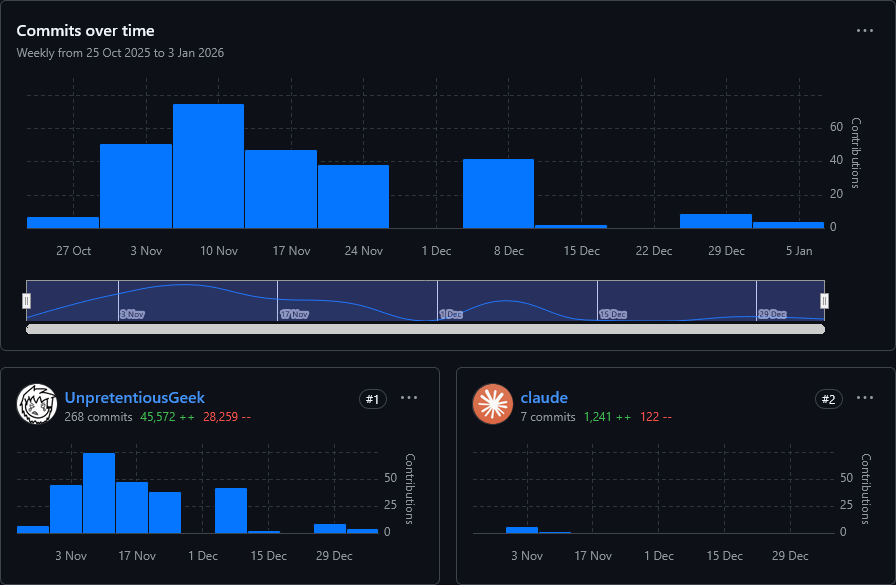
GitHub served as the definitive source of truth, synchronizing the agent-generated code with my manual refinements. I maintained a clean commit history to track the evolution of the application's core types and ensure the codebase remained stable across rapid iterations.
Vercel: Serverless Infrastructure
To support the multi-agent architecture, I deployed the application on Vercel using Serverless Functions. This setup allowed me to securely orchestrate the Google Gemini and YouTube APIs on the backend without exposing sensitive keys or logic to the client.

Well begun is half done.
Horace
Overview
Context
Features
Design
Development
Baratie
Visit App
Timeline
December 2025
Role
Product Designer
Team
Just me!
Tools
Figma, Vercel
Context
I learned the basics of AI engineering in my Master's program and wanted to create something more robust when the semester ended. So, I created Baratie as a personal challenge to take those classroom concepts and engineer a full-scale app on my own.
Features
Multi-Modal Ingestion
I built the system to accept input from almost any source—users can paste YouTube URLs, upload PDF cookbooks, or snap photos of raw ingredients. The backend determines the "intent" of the file type and routes it to the specific AI agent best suited to extract the data.
Context-Aware Adjustments
Beyond static instructions, the app supports dynamic modifications through natural language. Users can ask to "make this vegan" or "lower the calories," and the system intelligently reconstructs the ingredient list and cooking steps to match these constraints without breaking the core recipe.
Design
Crafting a Custom Design System
To minimize friction, I evaluated multiple architectural approaches for the reporting feature. I mapped out flows for integrating it into the main feed versus creating a dedicated section, weighing the pros and cons of discoverability against user overwhelm.
Engineering Fluid Motion
Leveraging Framer Motion, I coded custom micro-interactions—from bouncy button states to fluid page transitions
Development
Claude Code: Agentic Workflow
I leveraged the Claude Code CLI as an autonomous pair programmer to accelerate development. By establishing strict architectural rules in a root CLAUDE.md file, I was able to guide the agent to implement complex features—like the state machine logic—while I focused on high-level system design.
GitHub: Version Control
GitHub served as the definitive source of truth, synchronizing the agent-generated code with my manual refinements. I maintained a clean commit history to track the evolution of the application's core types and ensure the codebase remained stable across rapid iterations.
Vercel: Serverless Infrastructure
To support the multi-agent architecture, I deployed the application on Vercel using Serverless Functions. This setup allowed me to securely orchestrate the Google Gemini and YouTube APIs on the backend without exposing sensitive keys or logic to the client.

Well begun is half done.
Horace
hakku015
Overview
Context
Features
Design
Development
Baratie
Visit App
Timeline
December 2025
Role
Product Designer, Developer
Team
Just me!
Tools
Figma, Vercel
Context
I learned the basics of AI engineering in my Master's program and wanted to create something more robust when the semester ended. So, I created Baratie as a personal challenge to take those classroom concepts and engineer a full-scale app on my own.
Features
Multi-Modal Ingestion
I built the system to accept input from almost any source—users can paste YouTube URLs, upload PDF cookbooks, or snap photos of raw ingredients. The backend determines the "intent" of the file type and routes it to the specific AI agent best suited to extract the data.
Context-Aware Adjustments
Beyond static instructions, the app supports dynamic modifications through natural language. Users can ask to "make this vegan" or "lower the calories," and the system intelligently reconstructs the ingredient list and cooking steps to match these constraints without breaking the core recipe.
Design
Crafting a Custom Design System
To minimize friction, I evaluated multiple architectural approaches for the reporting feature. I mapped out flows for integrating it into the main feed versus creating a dedicated section, weighing the pros and cons of discoverability against user overwhelm.
Engineering Fluid Motion
Leveraging Framer Motion, I coded custom micro-interactions—from bouncy button states to fluid page transitions
Development
Claude Code: Agentic Workflow
I leveraged the Claude Code CLI as an autonomous pair programmer to accelerate development. By establishing strict architectural rules in a root CLAUDE.md file, I was able to guide the agent to implement complex features—like the state machine logic—while I focused on high-level system design.
GitHub: Version Control
GitHub served as the definitive source of truth, synchronizing the agent-generated code with my manual refinements. I maintained a clean commit history to track the evolution of the application's core types and ensure the codebase remained stable across rapid iterations.
Vercel: Serverless Infrastructure
To support the multi-agent architecture, I deployed the application on Vercel using Serverless Functions. This setup allowed me to securely orchestrate the Google Gemini and YouTube APIs on the backend without exposing sensitive keys or logic to the client.

Well begun is half done.
Horace
hakku015